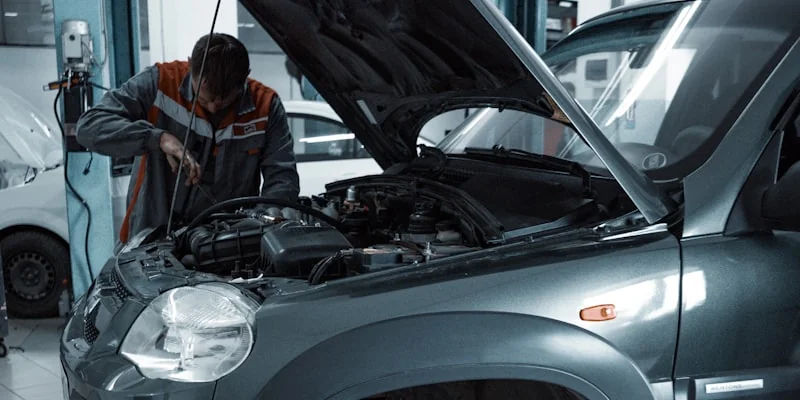
By September your car has endured five months of extreme heat, continuous AC demand and intense UV exposure. Temperatures inside a parked car regularly reach 70–80°C — enough to degrade rubber seals, accelerate fluid oxidation and stress every electrical component. This is the time to assess what summer has done before cooler months let problems hide.
Why September Is the Right Time to Inspect
Most drivers think of car servicing as something tied to mileage intervals. In Dubai, the calendar matters just as much. The May–September window puts your car under stress that no mileage-based schedule was designed for. A post-summer inspection catches damage that accumulated during that window — before it compounds into something expensive.
What to Check After a Dubai Summer
Engine Coolant and Radiator
Five months of high ambient temperatures mean your cooling system has worked harder than it ever would in a temperate climate. Check coolant concentration, inspect the radiator for scale build-up and check hoses for swelling or cracking. A coolant flush now prevents overheating incidents through the milder months.
AC System
Your AC has likely run continuously from May to September — that's roughly 3,000 hours of operation. Refrigerant loss through micro-leaks, condenser debris from dust storms, and worn compressor seals are all common. If your AC is slightly less cold than it was in April, that gap will widen by next summer.
Battery Load Test
Heat is a battery killer. Every degree above 25°C accelerates the chemical degradation inside the battery. A battery that starts your car fine in September may fail completely when temperatures drop to 15°C in January and the internal resistance changes. Load test it now — a replacement is around 300–600 AED, a call-out is more.
Tyres
Heat cycling causes tyre rubber to harden and small sidewall cracks to propagate. Check tread depth (minimum 1.6mm, ideally 3mm+), look for sidewall bulges and inspect valve stems for cracking. If your tyres are more than four years old, have them professionally assessed.
Brake Fluid
Brake fluid is hygroscopic — it absorbs moisture from the air. After a hot summer, moisture content rises and the fluid's boiling point drops. Brake fade is more likely with degraded fluid. A fluid replacement costs 150–300 AED and should be done every two years regardless.
Engine Air Filter
Dubai's dust is fine-grained and pervasive. Summer sees more sandstorm activity. A clogged air filter reduces combustion efficiency, increases fuel consumption and — in severe cases — allows abrasive particles into the engine. Inspect and replace if grey rather than white.
Drive Belts and Hoses
High temperatures accelerate rubber degradation. Inspect the serpentine belt for glazing, cracking or fraying. Check all coolant hoses for soft spots, bulging or hardening. A belt failure at the roadside costs far more than a 200 AED preventive replacement.
The Case for a Structured Post-Summer Service
Rather than inspecting components individually, a full vehicle health check covers everything in a single visit. Our post-summer package at FixHive typically includes fluid top-ups and checks, tyre and brake inspection, battery load test, AC pressure test and a full diagnostic scan for pending fault codes.
Book a Post-Summer Check → WhatsAppSummary: What the Post-Summer Inspection Covers
- Coolant concentration and radiator condition
- AC refrigerant level and compressor health
- Battery load test and terminal condition
- Tyre tread depth, age and sidewall condition
- Brake fluid moisture content
- Engine air filter condition
- Drive belts and coolant hoses
- Full OBD diagnostic scan
September is one of the best months to visit a garage in Dubai. The urgency of summer has passed, and technicians have time to inspect properly. Don't wait for a warning light — proactive checks here save significant money six months later.